Humanity and the planet would be a lot better off if society was about mutual service and health, rather than—and instead of—being more about the accumulation of wealth, and about competition over—domination of—material resources. We'd all be a whole lot better off if sharing was the rule.
Berd
Severn Suzuki addresses a panel at the 1992 UN (United Nations) Conference on Environment and Development in Brazil
Showing posts with label education. Show all posts
Showing posts with label education. Show all posts
06 January 2011

19 June 2010
Disability Justice
Yesterday I attended a disability justice workshop. I thought it was great, I learned a lot and thought the presentation was very well organized, and productive.
Here are notes:

view larger
I am in Detroit Michigan for 10 days for the Allied Media Conference (AMC) and the 2010 US Social Forum (USSF 2010). The AMC started on Friday. I have attended three workshops so far, including one on Disability Justice (DJ). The USSF will start on Tuesday the 22nd. I have been photographing a lot. I haven't counted by I am sure that I have well over 500 photos from the 5 day road trip from Olympia to Detroit. Photo content ranges from snapshot scenes inside the bus to landscapes from the moving bus to some candids and landscapes.
I attended a couple more workshops this Saturday afternoon. One was entitled Hurricane Season: Unearthing Solutions in an Era of Unnatural Disaster, by Climbing PoeTree. The other was a symposium about the writings of Octavia E. Butler. I thought both were very worthwhile.
I thought the DJ workshop yesterday was excellent and I heard from others that they thought so too.
The workshop started with a discussion about what Disability Justice means and the workshop organizers shared their working definition:
The room was full, with about 80 people in attendance. The participants split into three separate groups to discuss three interrelated aspects of DJ: Policing Bodies, Medical-Industrial Complex, and the Myth of Independence.
I was in the Myth of Independence group. After a round of brief introductions and sharing of thoughts, we discussed various aspects of how the myth of independence affects society and individuals, especially impaired people. Our conclusions included a social analysis of how our society favors a notion of independence, but that this notion is really illusory, and impaired people are discriminated against for being dependent, when in reality everyone is dependent-everyone is interdependent on each other, and interconnected. There is an fictitious idea, a harmful myth, that those whom are ambitious, DIY'ers, whom are entrepreneurial are somehow independent and that independence is a sign of strength, and intelligence (or even superiority.) When in reality, we are all interdependent, and interconnected, both able-bodied and disabled alike.
We see this myth in concepts like, "independently wealthy" and in comparisons between "high-functioning" and "low-functioning" persons, placing value and higher esteem on those who seem more highly functional. There is usually also higher status granted to those whom have invisible impairments, vs. impairments which are visible. We also see this idea reflected in the concepts of rugged individualism, pulling one's self up by their bootstraps, the "American Dream" - all of which carry the odor of Social Darwinism.
It seems to me that the myth of independence relates in important ways to the myth of meritocracy and the myth of scarcity. I think there are some important dots to connect between these concepts.
I think it is important to also mention that the function of our society causes harm. The function of our society causes impairment.
It was exciting to be around so many differently-abled people and think about the re-birth of a nonviolent world that places peoples' well-beings above and beyond anyone's supposed self-interest.
Just imagine. Imagine a world that is not harmful. A world that does not cause impairments...impairments that are caused by calculated and structural poverty, exploitative economics, any of various other deeply entrenched oppressions, or any other violence, very much including war. So I thought the education was good, and important.
Here are notes:
view larger
I am in Detroit Michigan for 10 days for the Allied Media Conference (AMC) and the 2010 US Social Forum (USSF 2010). The AMC started on Friday. I have attended three workshops so far, including one on Disability Justice (DJ). The USSF will start on Tuesday the 22nd. I have been photographing a lot. I haven't counted by I am sure that I have well over 500 photos from the 5 day road trip from Olympia to Detroit. Photo content ranges from snapshot scenes inside the bus to landscapes from the moving bus to some candids and landscapes.
I attended a couple more workshops this Saturday afternoon. One was entitled Hurricane Season: Unearthing Solutions in an Era of Unnatural Disaster, by Climbing PoeTree. The other was a symposium about the writings of Octavia E. Butler. I thought both were very worthwhile.
I thought the DJ workshop yesterday was excellent and I heard from others that they thought so too.
The workshop started with a discussion about what Disability Justice means and the workshop organizers shared their working definition:
DJ is a multi-issue political understanding of disability + Ableism, moving away from a rights-based equality model, to a framework that centers justice + wholeness for all disabled people + our communities.The various major disability movements were compared. These movements range from advocacy for services, to advocacy for rights, to working for basic root level justice. One of my thoughts about the justice movement is that it's radically different from the other movements because it includes the struggle for cultural transformation.
The room was full, with about 80 people in attendance. The participants split into three separate groups to discuss three interrelated aspects of DJ: Policing Bodies, Medical-Industrial Complex, and the Myth of Independence.
I was in the Myth of Independence group. After a round of brief introductions and sharing of thoughts, we discussed various aspects of how the myth of independence affects society and individuals, especially impaired people. Our conclusions included a social analysis of how our society favors a notion of independence, but that this notion is really illusory, and impaired people are discriminated against for being dependent, when in reality everyone is dependent-everyone is interdependent on each other, and interconnected. There is an fictitious idea, a harmful myth, that those whom are ambitious, DIY'ers, whom are entrepreneurial are somehow independent and that independence is a sign of strength, and intelligence (or even superiority.) When in reality, we are all interdependent, and interconnected, both able-bodied and disabled alike.
We see this myth in concepts like, "independently wealthy" and in comparisons between "high-functioning" and "low-functioning" persons, placing value and higher esteem on those who seem more highly functional. There is usually also higher status granted to those whom have invisible impairments, vs. impairments which are visible. We also see this idea reflected in the concepts of rugged individualism, pulling one's self up by their bootstraps, the "American Dream" - all of which carry the odor of Social Darwinism.
It seems to me that the myth of independence relates in important ways to the myth of meritocracy and the myth of scarcity. I think there are some important dots to connect between these concepts.
I think it is important to also mention that the function of our society causes harm. The function of our society causes impairment.
It was exciting to be around so many differently-abled people and think about the re-birth of a nonviolent world that places peoples' well-beings above and beyond anyone's supposed self-interest.
Just imagine. Imagine a world that is not harmful. A world that does not cause impairments...impairments that are caused by calculated and structural poverty, exploitative economics, any of various other deeply entrenched oppressions, or any other violence, very much including war. So I thought the education was good, and important.
25 May 2010
Angela Davis
Angela Davis was in town over the weekend, and I have been learning more about her and her work. I didn't know much about Angela Davis before her visit. I enjoyed her speech very much, and I am impressed by her life and work. The following is an excerpt from an interview she did with frontline. I'll include a link to the original. There is also a biography available on the Speak Out website, here.
Angela Davis 1997 Interview with Frontline:
Below is the full text of the interview:
Angela Davis 1997 Interview with Frontline:
INTERVIEWER: Well, it's not just misogyny. Now it's kind of moved just a straight crass materialism. The latest ones are just -- they just name off name brands. That's the progression of it. How have we reached a point where in 1997 that the ethic of being black means that you don't go to school to learn. That learning is equated with whiteness and that somehow that is bad?
DAVIS: Well, whether it's the approach that all young black kids are encouraged to take or decide to take. Because you do have this rising middle class and you do have the young brothers and sisters who are moving toward the corporate arena and who are encouraged to do this arena from the time that they are very young. I think this is one of those moments where we also have to talk about the deterioration of the institutions.
I can't really blame a lot of young sisters and brothers who believe that education has anything to offer them. Because as a matter of fact, it has nothing to offer them. Suppose they do get a high school diploma that is meaningful. What kind of job is awaiting them. The jobs that used to be available to working class people are not there as a result of the de-industrialization of this economy.
Therefore, often young black people are looking towards the alternative economies. They are looking towards the drug economy.... the economies that are going to -- that apparently will produce some kind of material gain for them. You can't criticize people for wanting to have a decent life or wanting to live decently. While I think that it is true that there is a great deal to be done with respect to the ideas that circulate among young people within arenas such as hip hop. At the same time, we can't forget about the deterioration of the institutions and the structural influence on young people.
Below is the full text of the interview:
16 April 2010
Distributing War Resisters League Truth about Income Tax Flyers at the P.O.

03 April 2010
27 March 2010
Saturday, February 27, 2010
Earlier this evening I went to see Annie Leonard give a talk at Orca Books about her new book. It's titled, The Story of Stuff, and it is basically an expansion on the same ideas that are part of a video she did. The video was a tremendous success, having been seen by people in hundreds of countries all around the world. The book also is showing early signs of success. One of the main messages in the video and book is that another way is possible. That is, we as a humanity can do better. We can live in a way that is not destructive. We can live in a way that instead is actually beneficial to all beings. We can live in a way that serves life, i.e. promotes health and ecological stability, etc.... Annie mentioned that she is a strong proponent of legislation that would curtail and counteract pollution and other destructive economic activities... She also talked about going through a program at a leadership institute (Rockwood), and how beneficial that experience was in terms of learning about her communication style, and ability to interact effectively, and be able to meet members of her target audience (which is pretty much everyone) where they are. She also mentioned Free Range studios for the great work they did in helping with her video. You can find more information about the Story of Stuff on the website, here. If you want to buy the book, Annie strongly recommends visiting your locally owned independent bookseller. If you don't have one of those, maybe you can buy it off of the Story of Stuff website.
After that, I wrote three poems titled, "A River," "The Illusion of Solidity," and "Take the Bus."
I also photographed some night scenes around town. There was a lot of activity downtown tonight. People seemed to be quite agitated.
I wonder if we will experience another big earthquake sometime around the upcoming full Moon.
♥☮
Berd
here are those photos (in chronological order):
After that, I wrote three poems titled, "A River," "The Illusion of Solidity," and "Take the Bus."
I also photographed some night scenes around town. There was a lot of activity downtown tonight. People seemed to be quite agitated.
I wonder if we will experience another big earthquake sometime around the upcoming full Moon.
♥☮
Berd
here are those photos (in chronological order):
16 February 2010
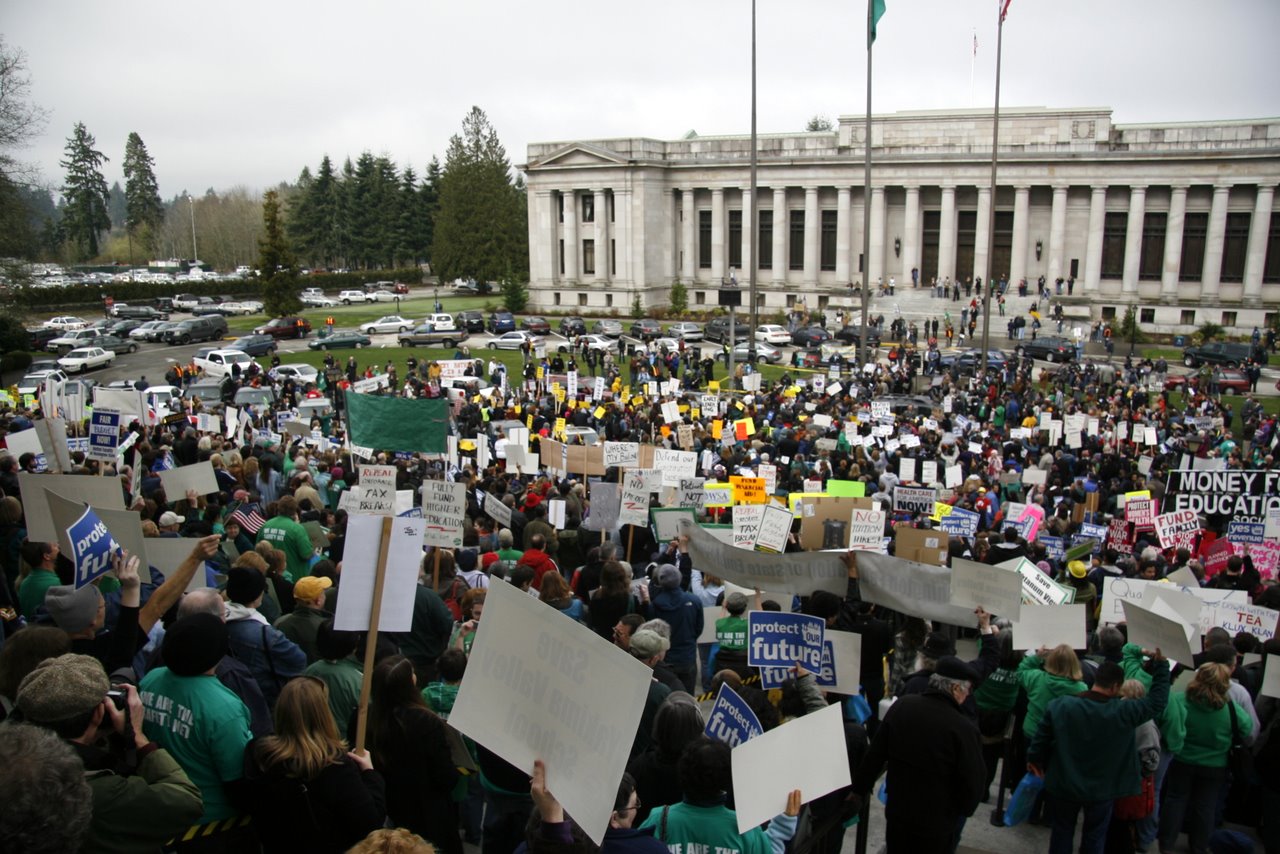
12 February 2009
Hampshire College to Make Divestments from Israel
From Democracy Now!:
Hampshire College Becomes First U.S. College To Divest From Israel
The Board of Trustees at Hampshire College has agreed to divest from six companies because of their involvement in the Israeli occupation of the West Bank and Gaza. Hampshire is believed to be the first U.S. college or university to divest from companies tied to the Israeli military. The companies are Caterpillar, United Technologies, General Electric, ITT Corporation, Motorola, and Terex. The Board agreed to the divestment following a two-year campaign by the campus group Students for Justice in Palestine. 32 years ago Hampshire College became the first school to divest from apartheid South Africa.
30 November 2008
Power of Community
I already published this video on this blog, but it's worth posting again. It is about how the nation of Cuba survived a crisis similar to Peak Oil, in 1991, when imports from the Soviet Union ceased (upon collapse of the U.S.S.R..) The film explores how the Cuban people adjusted, specifically in terms of local economic solutions.
Many of the same solutions could be applied to societies elsewhere, if we were to make conscious changes, and a decision to move away from an economic infrastructure that is based on and utterly dependent on petroleum resources. Petroleum is a finite resource. It will run out. Whether it is in 30, 50, 100, or 300 years (or however long), there will come a time when we will not have access to petroleum.
What will fuel our economy and our every day lives? To what will we turn?
I argue that we would be better off to make these decisions, to make appropriate changes, without a (metaphorical) gun pointed toward our heads. Already, we are embroiled in wars over resources. Many people suffer and die because of domestic demand for petroleum. It's unethical to kill people over resources. The technology exists for an altruistic and enlightened society. Let us make changes that will benefit ourselves, and indeed all of humankind and future generations.
link to film on internet: http://www.livevideo.com/video/mercofspeech/CD893609A0CB495D9A9CF04AC9E4AEFF/power-of-community-how-cuba-.aspx
Many of the same solutions could be applied to societies elsewhere, if we were to make conscious changes, and a decision to move away from an economic infrastructure that is based on and utterly dependent on petroleum resources. Petroleum is a finite resource. It will run out. Whether it is in 30, 50, 100, or 300 years (or however long), there will come a time when we will not have access to petroleum.
What will fuel our economy and our every day lives? To what will we turn?
I argue that we would be better off to make these decisions, to make appropriate changes, without a (metaphorical) gun pointed toward our heads. Already, we are embroiled in wars over resources. Many people suffer and die because of domestic demand for petroleum. It's unethical to kill people over resources. The technology exists for an altruistic and enlightened society. Let us make changes that will benefit ourselves, and indeed all of humankind and future generations.
link to film on internet: http://www.livevideo.com/video/mercofspeech/CD893609A0CB495D9A9CF04AC9E4AEFF/power-of-community-how-cuba-.aspx
Subscribe to:
Comments (Atom)